
Mobility Coalition Urges Council to Focus a Potential TBD on Growth Center Projects
Mobility Coalition Urges Council to Focus a Potential TBD on Growth Center Projects
Bellevue Chamber | April 21, 2026
Today the Bellevue Mobility Coalition sent City Council a framework for how a potential Transportation Benefit District should be structured, reiterating the principles the Coalition first submitted to city staff in February. The letter, signed by Chamber President and CEO Joe Fain on behalf of the Coalition, lands before Council has held substantive discussions on TBD funding mechanisms or project priorities.
Read the Full Letter
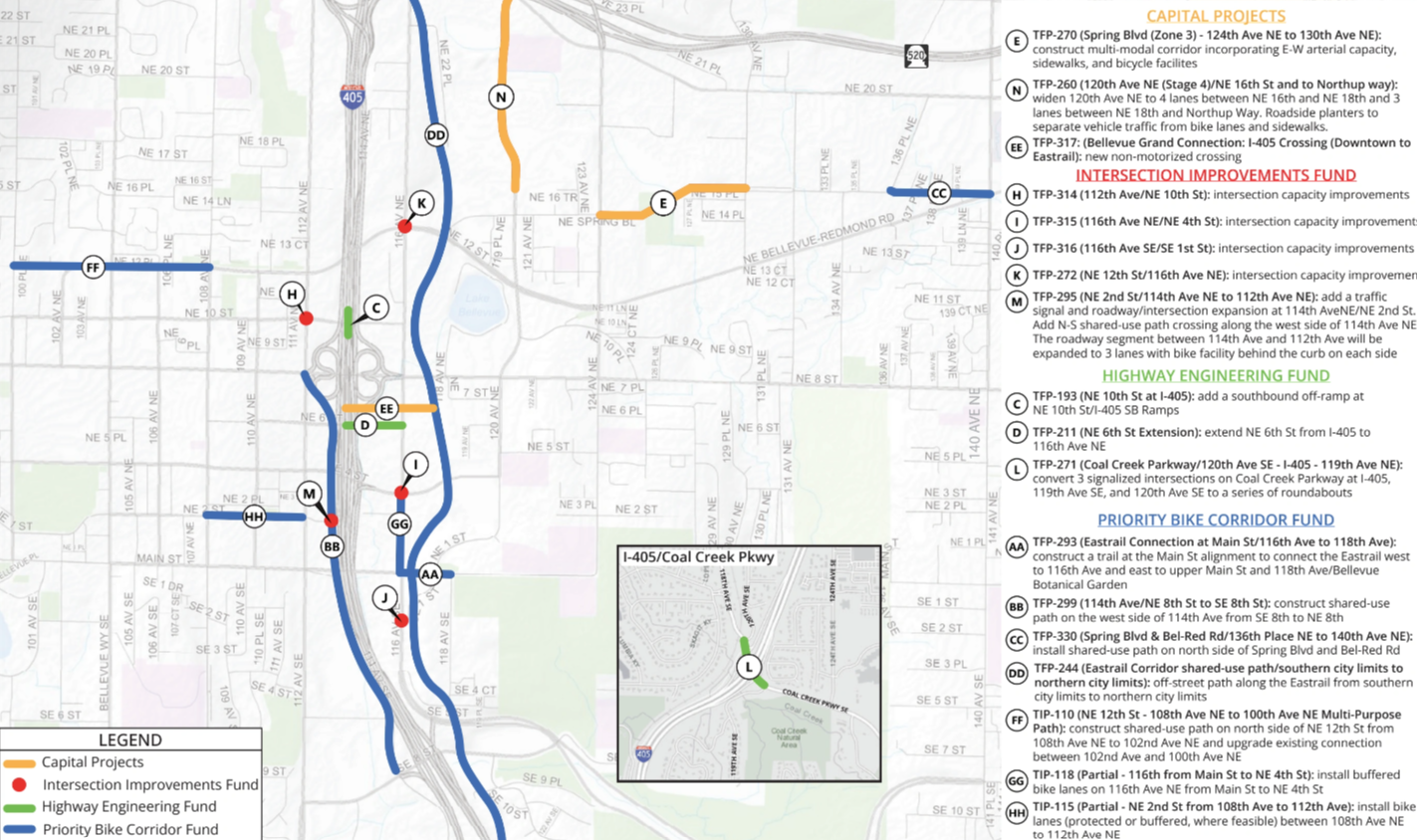
The Bellevue Mobility Coalition's full letter to City Council, including the project map, is available below.
Having trouble with the embedded viewer? Open the letter in a new window.
A Framework Ahead of the Conversation
The Bellevue Mobility Coalition, convened by the Chamber, represents Eastside employers, developers, and mobility providers working to advance near-term transportation projects. The April 21 letter brings BMC's February recommendations directly to Council, positioning the framework as early input rather than a reaction to a staff proposal.
"As the City considers tools to address transportation challenges associated with continued growth, the recently formed Transportation Benefit District (TBD) presents an opportunity to advance high-impact investments if appropriately structured." — Bellevue Mobility Coalition letter to Council
The six growth centers named in the letter are Downtown, Wilburton, Bel-Red, East Main, Factoria, and Eastgate, and the framework is tied to the 2044 Comprehensive Plan period.
Matching the Funding Tool to Where the Revenue Is Generated
The letter's central argument is a division of labor across three revenue tools. Property tax, via the transportation levy, and vehicle license fees should continue funding neighborhood projects. The sales tax TBD, by contrast, should primarily fund the growth centers, since that is where most sales tax revenue is generated.
"The vast majority of sales tax revenue is generated in the growth centers, so it is appropriate for a sales tax TBD to primarily fund projects that benefit these areas and enable more growth, and more sales tax revenue, to occur." — Bellevue Mobility Coalition letter to Council
Five Funding Categories
To operationalize the framework, the Coalition recommends five categories inside a potential TBD:
- Capital Projects, to fund Spring Boulevard Zone 3, the Bellevue Grand Connection, and 120th Avenue NE Stage 4, bonded and combined with other sources;
- Intersection Improvements Fund, for growth-center intersections forecast not to meet vehicular LOS standards;
- Priority Bike Corridor Fund, to complete the city's priority bicycle and pedestrian corridors without eliminating arterial lanes;
- Highway Engineering Fund, for advocacy, planning, and engineering on WSDOT-led corridor projects; and
- Technology Fund, for technology that improves multimodal LOS and expands network capacity.
The letter invites Council to co-develop principles for the four flexibility funds (Intersection, Bike, Highway, and Technology) so each category has clear targets without locking project timing. An attached map identifies the specific Transportation Facilities Plan and Transportation Improvement Program projects in each category, from Spring Boulevard Zone 3 to the Coal Creek Parkway roundabout conversion and the Eastrail corridor shared-use path.
What Comes Next
Council has not yet opened a formal public process on the TBD's structure, so the Coalition is positioning this letter as a starting point rather than a response to a staff recommendation.
"We would like to work with you to develop the fund principles." — Bellevue Mobility Coalition letter to Council
The Coalition's engagement also connects to parallel transportation work across the Eastside. PLUSH is weighing a comment letter on Bel-Red's street grid ahead of the April 22 Planning Commission hearing, and the Chamber is coordinating a separate letter to Sound Transit on East King sub area equity before the agency finalizes its financial plan in early May.
Categories
Bellevue Chamber President & CEO Joe Fain: “In practical terms, this means taxpayers and employers from every corner of Washington would be directly subsidizing the City of Seattle’s budget.”
Read the editorial: https://lnkd.in/g-MttGZa
As we evaluate the legislation, we’re focused on affordability impacts for families and employers, whether outcomes are tangible in communities, and how the policy affects long-term budget sustainability and Washington’s competitiveness.
Chamber President & CEO Joe Fain also flagged several structural issues that need closer review, including treatment of pass-through entities, charitable deductions, a potential marriage penalty, and interactions with other state tax policies.
Read more: https://lnkd.in/g8Uv_wD4