
EKCC Legislative Wrap Up: What the 2026 Session Left Behind
EKCC Legislative Wrap Up: What the 2026 Session Left Behind
Bellevue Chamber Staff | May 5, 2026
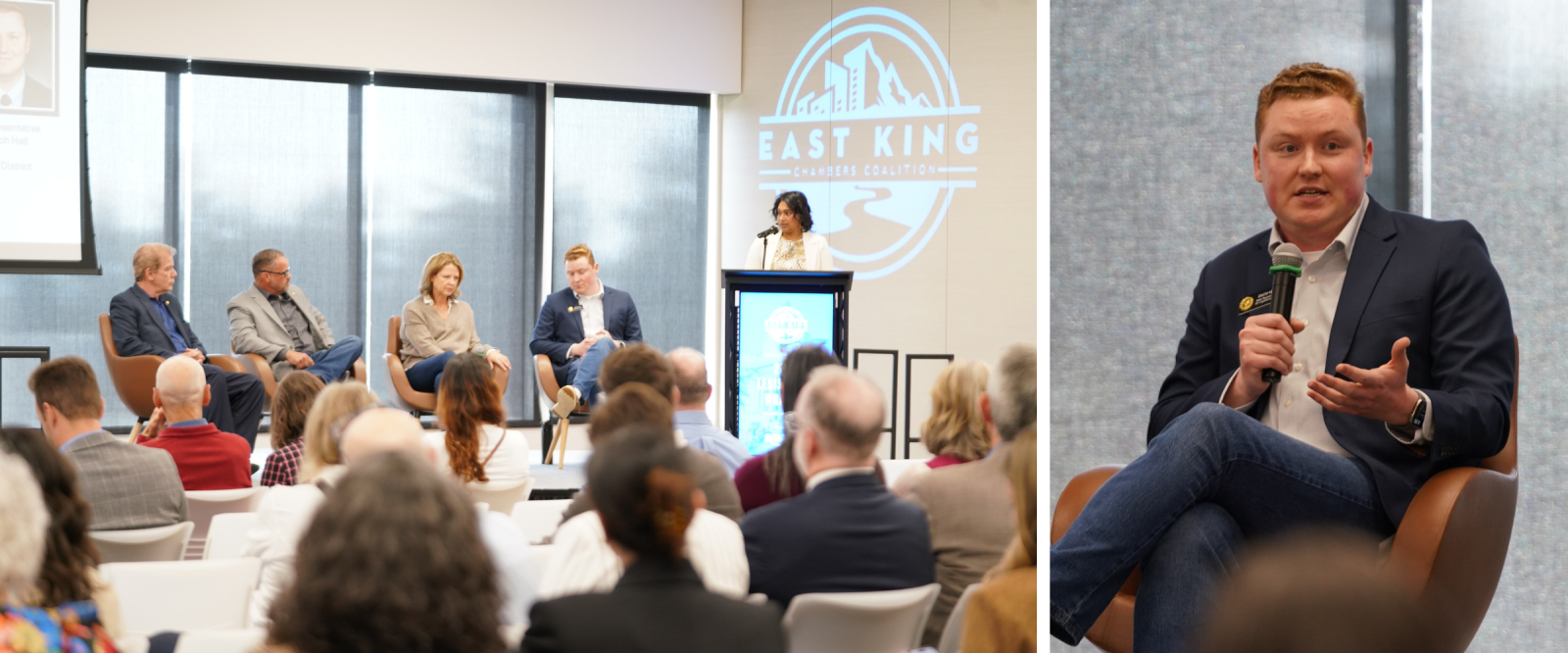
We closed the 2026 state legislative session at Bellevue College on Tuesday afternoon with seven of our region's lawmakers and the East King Chambers Coalition at our annual Legislative Wrap Up.
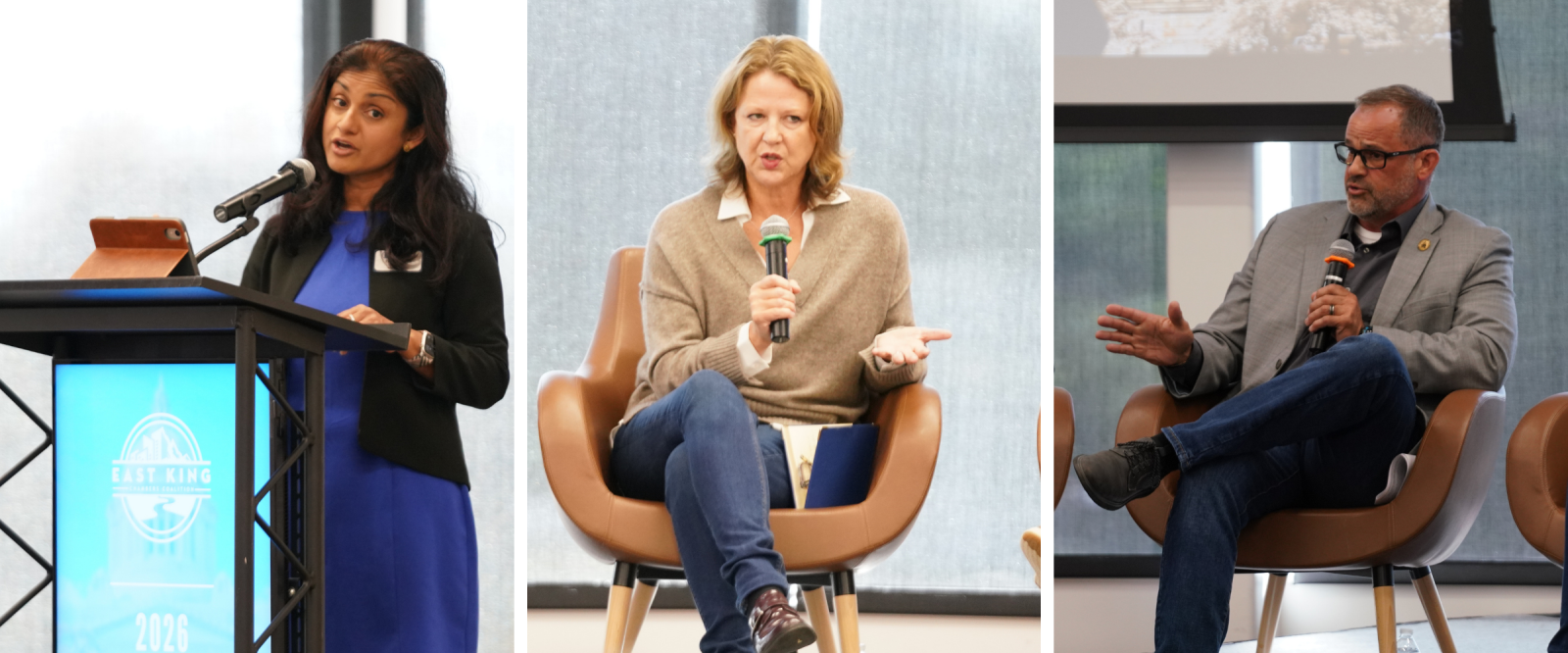
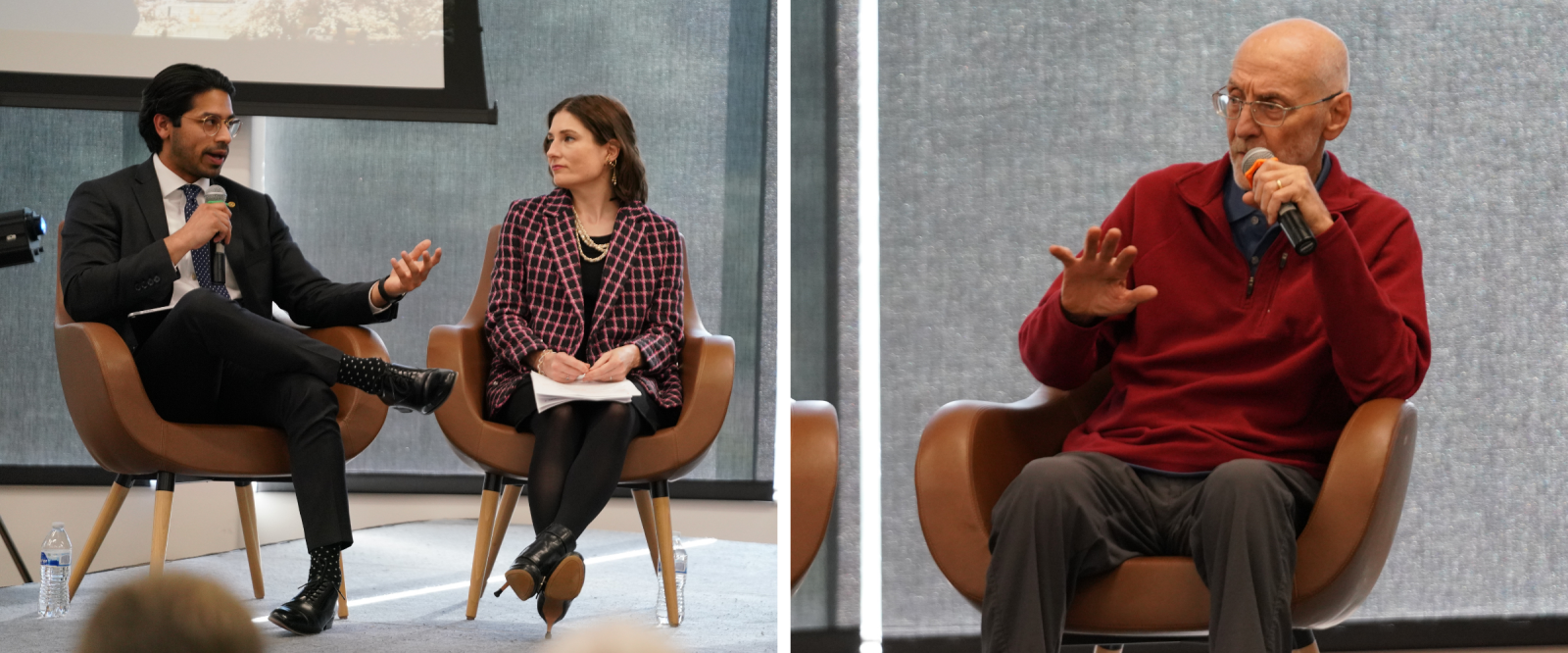
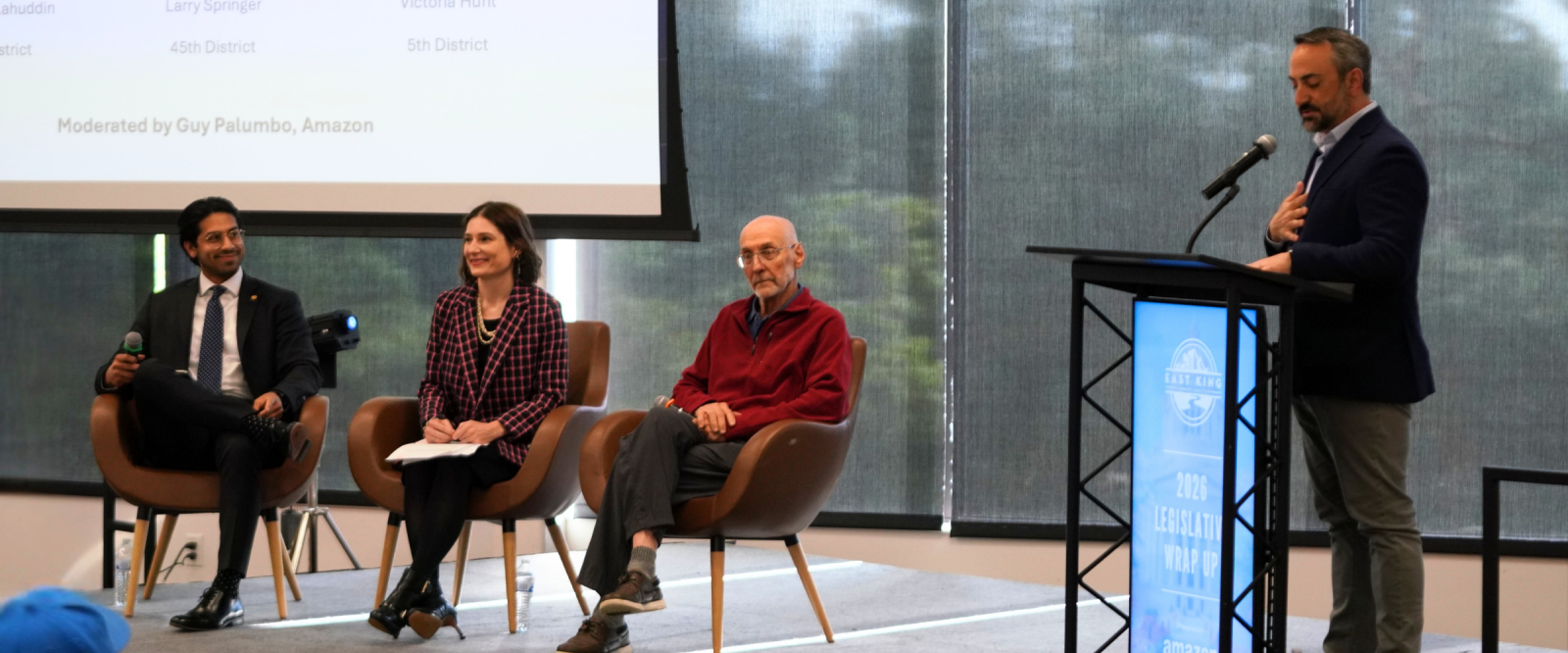
Bellevue College Board of Trustees Chair Pradnya Desh opened the room, passing things off to Symetra's Sharmila Swenson for the first panel. Joining the panel were Rep. Roger Goodman (45th), Rep. Amy Walen (48th), Rep. Zach Hall (5th), and Rep. Brian Burnett (12th), with the second panel moderated by Amazon's Guy Palumbo and featuring Rep. Larry Springer (45th), Rep. Osman Salahuddin (48th), and Sen. Victoria Hunt (5th).
The fiscal picture
In true Chamber fashion, we touched on the budget, economy, and jobs, with Rep. Walen setting the frame that anchored the rest of the conversation. She highlighted that the COVID-era federal stimulus funds are gone, while the "temporary" programs they funded are still in place.
"Last biennium we spent $4.8 billion more than the revenue that we took in," she told the room, "And that is just not sustainable."
Rep. Larry Springer, a former Mayor of Kirkland, called it a process problem the state imported on itself.
"When you build budgets, whether it's your home budget, your car dealership budget, or the budget for your local wine store, or [even] if it's the City of Kirkland, you start that budget process by figuring out what you legitimately can expect in the way of revenue," he said.
Olympia, he argued, has gotten that backwards: It starts with what it wants to provide, and builds the revenue to pay for it.
The pressure underneath the budget numbers is demographic: Rep. Goodman, a long-serving legislator and former state agency director, pointed to the math behind the caseload growth. "Two hundred people a day move to Washington State," he said. "We're sort of a victim of our own success because they're all coming to this area, [and] this area becomes unaffordable."
The numbers on this, however, are mixed. IRS data from the most recent year available, 2023, show that while population continues to grow, the aggregate amount of income in the region has fallen for the first time in decades.
The tax conversation
Rep. Salahuddin, a Redmond native, made the case for a balanced approach on tax policy. "When I'm thinking about policies, I think we need to look at not just progressive revenue, but repealing the regressive taxes that we have that also cause folks to want to leave," he told the room.
His next-session priority is the B&O tax ... the one he voted against in his first session as part of what he called the, "largest tax increase in state history."
Rep. Springer drew the same conclusion, yet from the other direction. He told the room he is in favor of a graduated income tax, but only as the tradeoff for pulling down the most regressive taxes in the system: The sales tax, the B&O tax, and a smaller property tax footprint.
Public safety and the AI shock
Rep. Burnett, a former Chelan County sheriff who served on the Criminal Justice Training Commission when the newsworthy Initiative 940's de-escalation training was implemented, brought the operator's view on public safety.
His message to the room was that what looks like compliance trouble, is actually likely implementation friction in smaller agencies, rather than a policy failure.
On the topic of AI, Rep. Hall, who is in his first term and representing the 5th alongside Sen. Hunt, pushed back on any single-explanation read of the layoff and unemployment numbers our region has been watching. He says that while AI is part of it, cost of living is also part of it.
"There's kind of a third bucket here as well that sometimes gets lost that is more zoomed in around internal business decisions," he said, pointing to Meta's recent pivot as the kind of company-specific story that ripples through Eastside payrolls in ways that have nothing to do with AI.
Energy and the long view
Sen. Hunt closed the legislator round on an energy infrastructure question, which is increasingly becoming the data center question. As vice chair of the Senate Environment, Energy and Technology Committee, she sponsored this session's most consequential bill on the issue.
"One of the bills that we were able to pass that I prime sponsored was the creation of a transmission authority for Washington," she told the room. "This will allow us to identify those corridors where we need to get the power flowing, and we'll be able to get the power from where it's generated to where it needs to be used."
Microsoft's Barb Wilson closed things out with the employer view, saying that despite what was said during the panels, "Capital flight is real."
"It impacts everything in the state. It impacts state revenue, venture capital investment, nonprofits who depend on philanthropy, and it impacts affordability."
The balance between quality of life and economic resiliency will be an ongoing debate in the legislature.
When eleven Eastside chambers convene with the legislators they share, the questions get sharper and the answers do too. Watch the recording of the discussion from TVW here, and a huge thanks goes to Bellevue College for hosting us.
Categories
Bellevue Chamber President & CEO Joe Fain: “In practical terms, this means taxpayers and employers from every corner of Washington would be directly subsidizing the City of Seattle’s budget.”
Read the editorial: https://lnkd.in/g-MttGZa
As we evaluate the legislation, we’re focused on affordability impacts for families and employers, whether outcomes are tangible in communities, and how the policy affects long-term budget sustainability and Washington’s competitiveness.
Chamber President & CEO Joe Fain also flagged several structural issues that need closer review, including treatment of pass-through entities, charitable deductions, a potential marriage penalty, and interactions with other state tax policies.
Read more: https://lnkd.in/g8Uv_wD4