
San Francisco Fed's Sylvain Leduc discusses economy's resilience, supply shocks, & AI
San Francisco Fed's Sylvain Leduc discusses economy's resilience, supply shocks, & AI
Bellevue Chamber | July 21, 2026
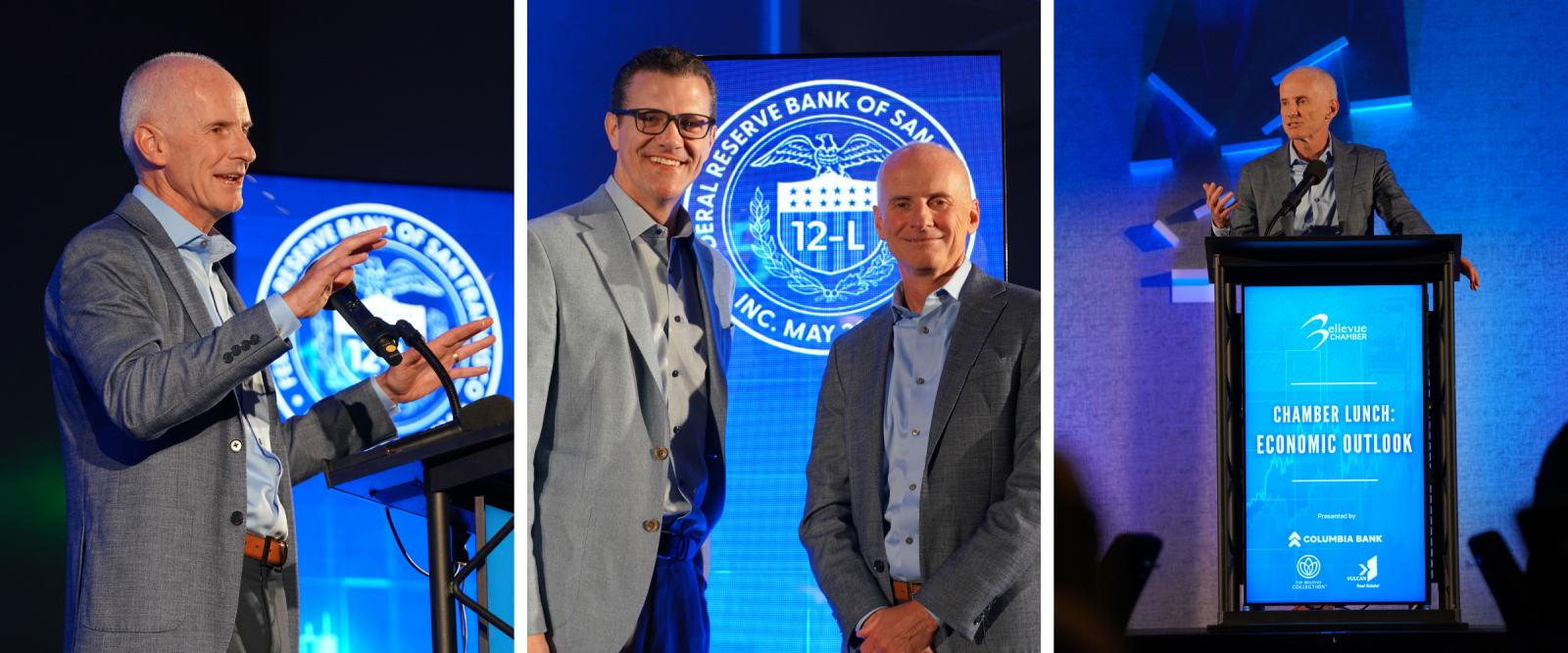
When we get the chance to bring one of the country's leading economic voices to Bellevue, we take it … even in the middle of summer! This month we welcomed Sylvain Leduc — Executive Vice President and Director of Economic Research at the Federal Reserve Bank of San Francisco — for a Chamber Lunch conversation about the forces reshaping the economic outlook.
Please note: Leduc stated that the views he shared were his own and did NOT represent the San Francisco Fed or the Federal Reserve System.
From Demand Shocks to Supply Shocks
For most of the decade before the pandemic, Leduc explained, the economic conversation was about too little demand — think weak investment, slow hiring, and inflation stuck below the Fed's 2% target — but today, the story has flipped. Supply shocks now dominate, from global supply chains and shifting immigration to tariffs, energy prices, and the rise of AI.
He highlighted that this shift matters because supply shocks are hard on policymakers, as they push the Fed's two goals, price stability and maximum employment, in opposite directions, and the Fed has essentially one tool to manage both.
Raising rates to cool inflation can weaken hiring, and cutting rates to protect jobs can fuel prices. As Leduc put it, the Fed has to, "thread the needle," which helps explain the recent uptick in divergent views among policymakers.
Inflation: Two Drivers
PCE inflation peaked around 7% after the pandemic, gradually declined, and has drifted back up over the past year. But when you look under the hood, according to Leduc, the two categories that have picked up the most are energy and core goods.
Oil recently climbed above $100 before falling back toward the low $70s, and tariffs have acted like a one-time tax increase on goods prices. Strip those two effects out, and inflation would sit closer to 2.5 percent rather than around 4.The encouraging news is that both pressures could be temporary.
The AI Effect
Perhaps the most striking takeaway was how much of today's resilience traces back to AI. The five largest firms in the S&P 500 now account for roughly 30 percent of market capitalization, nearly double the concentration seen during the late-1990s tech boom. Investment in data centers and equipment has shot up like a “hockey stick,” and Leduc showed that removing AI-related investment and R&D from GDP would leave growth weaker by about a full percentage point.
That concentration carries risk, but because the largest players are well-capitalized and largely funding their bets with cash rather than heavy debt, Leduc does not currently see a financial stability threat like the one before the Great Recession. But, if those investments do not pay off, a hit to confidence could ripple through spending and prolong any downturn.
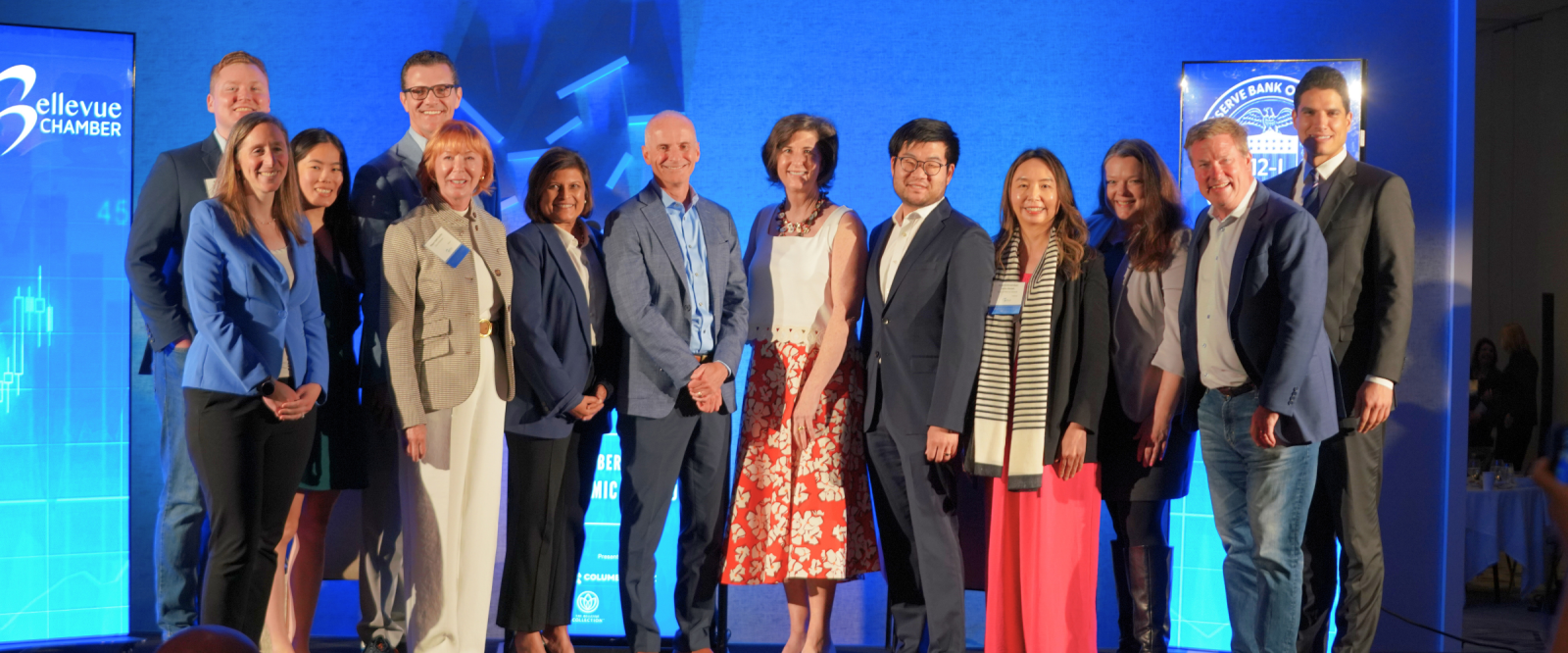
Thank you to all who joined us as an attendee, for the team from the Fed for pulling this event off, and to our Chamber Lunch sponsors. Y'all rock!
Categories
Bellevue Chamber President & CEO Joe Fain: “In practical terms, this means taxpayers and employers from every corner of Washington would be directly subsidizing the City of Seattle’s budget.”
Read the editorial: https://lnkd.in/g-MttGZa
As we evaluate the legislation, we’re focused on affordability impacts for families and employers, whether outcomes are tangible in communities, and how the policy affects long-term budget sustainability and Washington’s competitiveness.
Chamber President & CEO Joe Fain also flagged several structural issues that need closer review, including treatment of pass-through entities, charitable deductions, a potential marriage penalty, and interactions with other state tax policies.
Read more: https://lnkd.in/g8Uv_wD4