
EBRT Recap: Dow Constantine on Sound Transit's $35B Reset and a Region That's Done Debating Transit
EBRT Recap: Dow Constantine on Sound Transit's $35B Reset and a Region That's Done Debating Transit
Sam Jones | May 14, 2026
Sound Transit CEO Dow Constantine closed our 2025-2026 EBRT season Thursday with a walk through the agency's revised system plan, a path to close most of a projected $35 billion deficit, a fare-gate pilot at up to 14 stations, a coming order of new light rail vehicles, and an all-hands operational plan for next month's FIFA World Cup match days. Since the Crosslake Connection opened on March 28, daily ridership has climbed roughly 15 percent to more than 142,000 boardings.
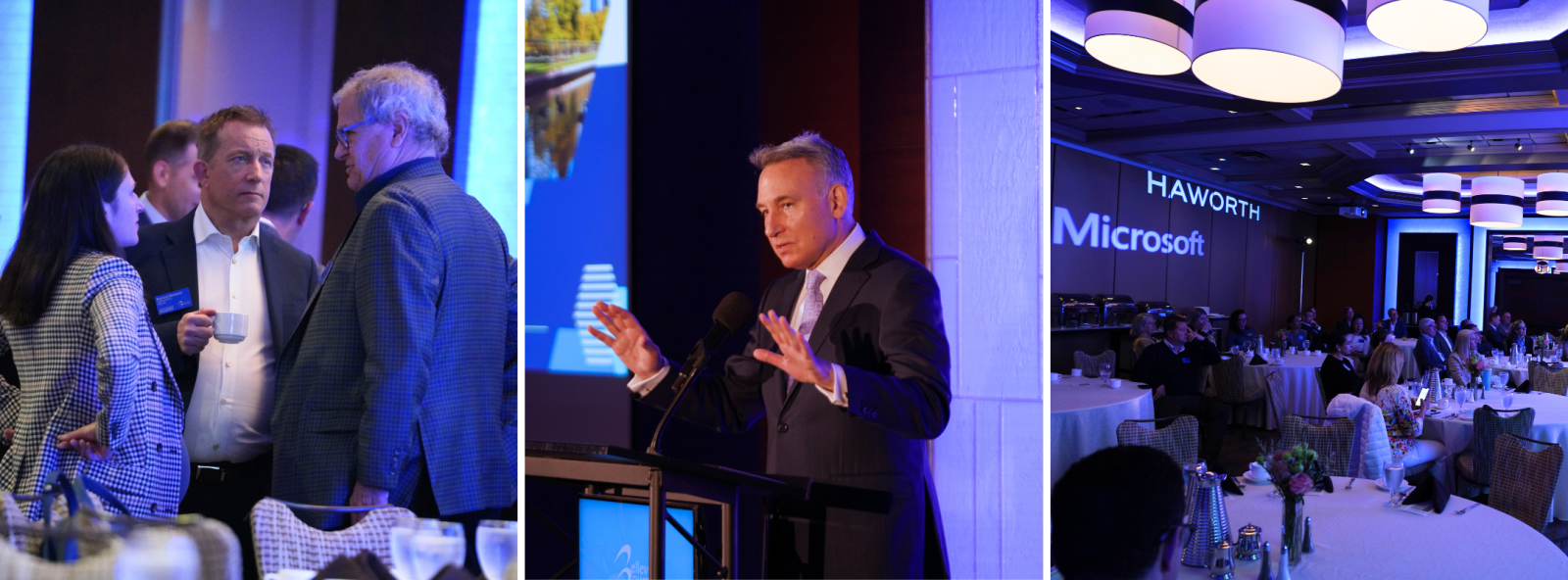
Microsoft's Barb Wilson opened the morning by framing Sound Transit, like Lumen Field a generation ago, as a long-term down payment on the region's economic competitiveness and ability to attract talent. Constantine picked up that thread by placing Bellevue at the center of it.
Expansion paired with discipline
Thirty new rail stations have opened in the last decade, and Sound Transit now operates 50 stations across 63 miles, with three rapid transit lines under construction along I-405 and SR 522 and a new Stride maintenance base going up in Bothell. Constantine framed maintenance as the discipline that protects all of it. The agency has set aside roughly $14 billion over the next two decades for state of good repair, and the reliability data is starting to show it: Unplanned service disruptions fell from an average of 38 hours per month in 2024 to under 5 hours last month. Sound Transit is also standing up an AI-enabled maintenance program and exploring communication-based train control so trains can run closer together, more on time, and more safely as ridership grows.
"We saw systems around the country that were in a debt spiral because they had succumbed to the temptation to divert maintenance money into shinier objects, things on which ribbons could be cut and brass plaques could be affixed." — Dow Constantine, CEO, Sound Transit
A $35 billion question, on a tighter clock
Constantine took the helm a year ago and inherited a six-year financial picture that looked healthy alongside a twenty-year outlook with roughly $35 billion in projected deficit, much of it traceable to pandemic-era construction inflation. The board chair's revised system plan, headed for a board vote on the 28th, preserves about 92 percent of the original ridership projections by removing the least-patronized Avalon Station on the West Seattle line and shifting tunneling further south, sequencing the Issaquah-to-Kirkland alignment later than originally planned while keeping it fully funded, and reserving design and engineering dollars across every extension so the work is ready when construction money is. Sound Transit held its top S&P and Moody's bond ratings through the reset and just refunded $225 million in debt for roughly $26 million in present-value savings, and three federal and state audits cleared this year with no significant findings.
"From now on we're going to be having twice-a-year updates on our long-range financial outlook. We're going to be continuously monitoring and altering course rather than having to lurch from crisis to crisis every five to ten years." — Dow Constantine, CEO, Sound Transit
Eastside, fare gates, and a fleet refresh
For the Eastside, the sub-area equity principle continues to do the heavy lifting. Local revenues have grown alongside the local economy, which is why the Redmond-to-Kirkland line stays in the plan and why design dollars for that next phase remain protected even under the broader squeeze. Constantine also previewed the fare-gate pilot the board recently authorized, scoping up to 14 of the most heavily used stations to retrofit and modeled on what BART in San Francisco has seen: Better fare collection, fewer calls for service, and cleaner stations. New stations from this point forward will be designed to accommodate gates from the start. To meet demand on the 2 Line and across the system, Sound Transit is preparing to order its next series of light rail vehicles, with retirement of the 2009-era fleet beginning when those arrive, and the agency is rolling out parking-pass options to guarantee commute-hour spots at the busiest garages.
World Cup readiness next month
Six FIFA World Cup match days, plus the weeks of visitor activity around them, will put Sound Transit on a stage it has been preparing for since Seattle was named a host city four years ago. Trains will run peak service all day across the light rail system, with eight-minute headways system-wide and four-minute headways between International District/Chinatown and Lynnwood, alongside additional Sounder trains and standby express buses on match days. Every Sound Transit employee has been asked to sign up for ambassador shifts on the platforms, and the agency is publicly steering Eastside arrivals to International District/Chinatown station to spread crowd demand and keep accessible boarding clear for fans with disabilities.
"The region spent decades debating if we should build a regional transit system. Today that debate is over. It is not people saying, should we or shouldn't we have transit. It is people saying, I love transit and I want more of it." — Dow Constantine, CEO, Sound Transit
Thursday closed our 2025-2026 EBRT cycle, with thanks to Microsoft, Haworth, and Verizon for sponsoring this year's series. Planning for the 2026-2027 EBRT season begins this summer, and the program returns in the fall.
Categories
Bellevue Chamber President & CEO Joe Fain: “In practical terms, this means taxpayers and employers from every corner of Washington would be directly subsidizing the City of Seattle’s budget.”
Read the editorial: https://lnkd.in/g-MttGZa
As we evaluate the legislation, we’re focused on affordability impacts for families and employers, whether outcomes are tangible in communities, and how the policy affects long-term budget sustainability and Washington’s competitiveness.
Chamber President & CEO Joe Fain also flagged several structural issues that need closer review, including treatment of pass-through entities, charitable deductions, a potential marriage penalty, and interactions with other state tax policies.
Read more: https://lnkd.in/g8Uv_wD4