
Bank of America's Joe Quinlan releases top reading recommendations for Fall 2026
Bank of America's Joe Quinlan Shares His Top Reading Recommendations for Fall 2026
Chamber Team | November 2026
Each year, Joe Quinlan, Head of Market Strategy for Bank of America's Chief Investment Office and keynote speaker for our Economic Forecast Summit, puts together his Top 10 Suggested Publications. This year's list arrives ahead of his 20th consecutive Summit keynote on November 18 and covers China's building boom, the cables under the ocean, a warming Arctic, Taiwan, and the future of globalization.
The picks for 2026 are ...

Breakneck: China's Quest to Engineer the Future
by Dan Wang
Drawing on years of annual letters from inside China, Dan Wang contrasts China's "engineering state," which builds at astonishing speed, with America's "lawyerly society," which excels at process and protection. The result is a sharp look at what each country does well, what each gets wrong, and what they might learn from one another.
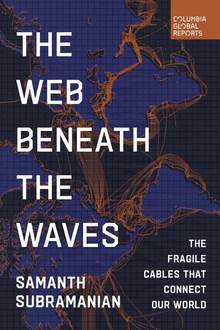
The Web Beneath the Waves: The Fragile Cables That Connect Our World
by Samanth Subramanian
Nearly all of the world's internet traffic travels through roughly 900,000 miles of fiber-optic cable on the ocean floor. Subramanian profiles the crews who lay and repair these lines and examines the sabotage, corporate power, and geopolitical tension surrounding infrastructure most of us never think about.
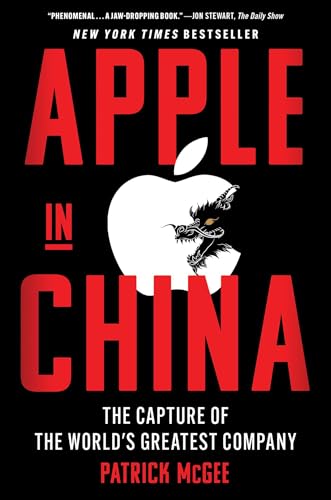
Apple in China: The Capture of the World's Greatest Company
by Patrick McGee
Based on interviews with more than 200 former Apple executives and engineers, McGee shows how Apple's search for scale and low-cost manufacturing led it to build a vast supply chain in China, training millions of workers and, in the process, helping build the very industry that now gives Beijing leverage over the company.
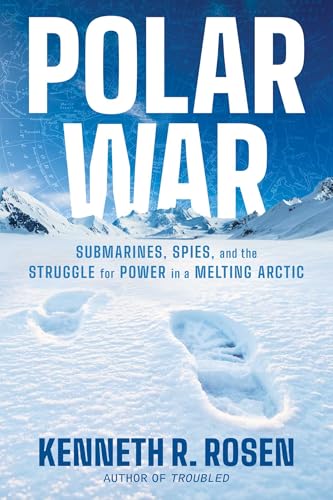
Polar War: Submarines, Spies, and the Struggle for Power in a Melting Arctic
by Kenneth R. Rosen
As Arctic ice retreats, new shipping lanes and resources are opening, and so is a new arena for great-power competition. Drawing on two years of reporting, Rosen shows how the region is becoming a new front in a cold war between Russia and the West, with consequences for science, security, and global power.
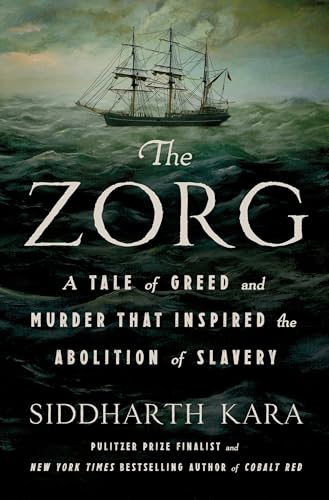
The Zorg: A Tale of Greed and Murder that Inspired the Abolition of Slavery
by Siddharth Kara
In 1781, the crew of the slave ship Zorg threw more than 120 captive Africans overboard, and its owners then filed an insurance claim for lost "cargo." Kara reconstructs the voyage and the court case that followed, showing how public outrage over the killings helped ignite the movement that ended Britain's slave trade.

The Gales of November: The Untold Story of the Edmund Fitzgerald
by John U. Bacon
Fifty years after the Edmund Fitzgerald went down in a Lake Superior storm on November 10, 1975, taking all 29 crew members with it, Bacon draws on more than 100 interviews to tell the human story behind the wreck and the Great Lakes shipping industry it served.

Alone in Japan: A Journey to the Future
by Tom Feiling
Japan was once held up as a model of prosperity and social cohesion. Returning decades after he first arrived in Tokyo, Feiling travels from rural villages to major cities to examine a falling birth rate, a shrinking population, and rising isolation, and asks whether Japan is an outlier or a preview of what other aging societies may face.

The World's Worst Bet: How the Globalization Gamble Went Wrong (And What Would Make It Right)
by David J. Lynch
Washington Post global economics reporter David J. Lynch argues that the United States embraced globalization without building the safeguards needed to protect workers and communities, and lays out the policy choices that could put trade on a sturdier footing.
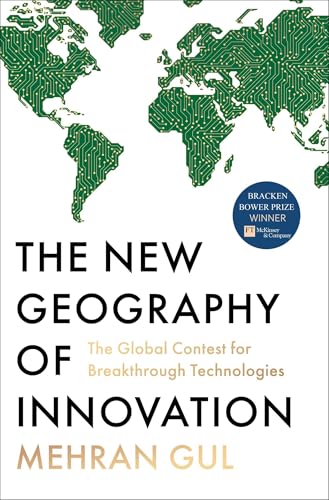
The New Geography of Innovation: The Global Contest for Breakthrough Technologies
by Mehran Gul
Silicon Valley no longer has the startup world to itself. In 2013, only 12 of 39 billion-dollar private tech companies were based outside the U.S.; a decade later, roughly half of more than 1,200 were. Gul explores the new hubs emerging around the globe and what their rise means for the race to build breakthrough technologies.
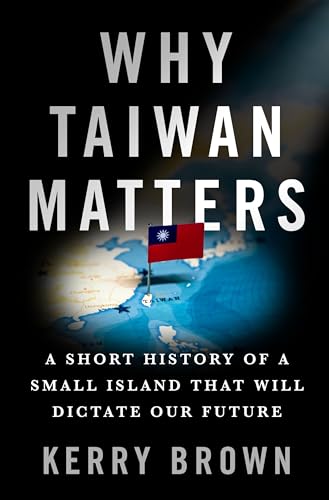
Why Taiwan Matters: A Short History of a Small Island That Will Dictate Our Future
by Kerry Brown
Taiwan is a democracy of about 23 million people whose companies produce most of the world's advanced semiconductors, and it sits at the center of U.S.-China tensions. Brown traces the island's history since 1949 and explains why its future carries such high stakes for the global economy.
Categories
Bellevue Chamber President & CEO Joe Fain: “In practical terms, this means taxpayers and employers from every corner of Washington would be directly subsidizing the City of Seattle’s budget.”
Read the editorial: https://lnkd.in/g-MttGZa
As we evaluate the legislation, we’re focused on affordability impacts for families and employers, whether outcomes are tangible in communities, and how the policy affects long-term budget sustainability and Washington’s competitiveness.
Chamber President & CEO Joe Fain also flagged several structural issues that need closer review, including treatment of pass-through entities, charitable deductions, a potential marriage penalty, and interactions with other state tax policies.
Read more: https://lnkd.in/g8Uv_wD4